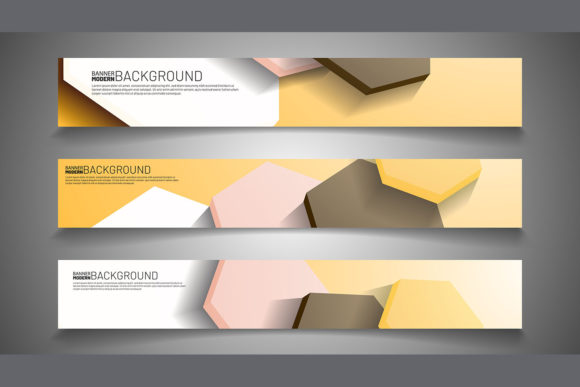
Evaluating Rectangular Banners with Vector Design for Professional Digital Layouts
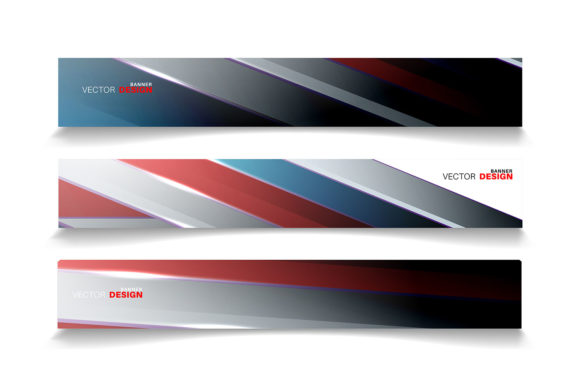
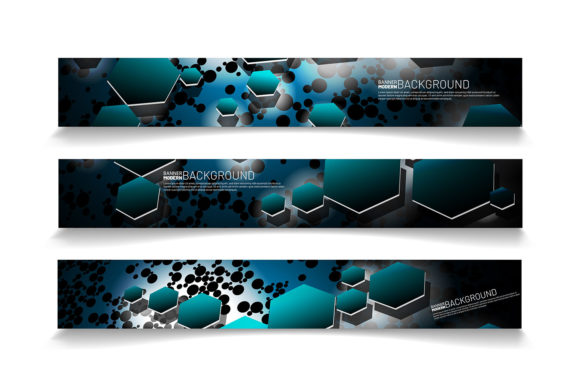
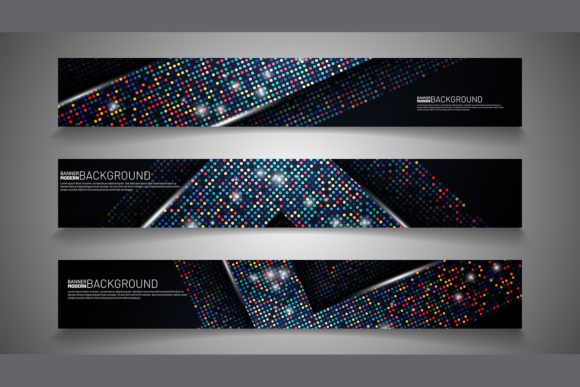
In the fast-paced world of digital marketing and web development, the quality of visual assets often dictates the perceived credibility of a brand. Among the various resources available to designers and business owners, Rectangular Banners with Vector Design have emerged as a critical component for creating scalable, high-quality visuals. Unlike standard raster images, which are composed of fixed pixels, vector-based banners utilize mathematical paths to define shapes, lines, and colors. This fundamental difference impacts everything from file size to editability, making it essential for professionals to understand when this format is the superior choice and when alternative solutions might be more appropriate.
The Core Distinction: Vector Versus Raster Formats
To make an informed decision about incorporating Rectangular Banners with Vector Design into your workflow, one must first distinguish between vector and raster graphics. Most users encounter raster images daily in the form of JPEGs or PNGs. These files are resolution-dependent; enlarging them beyond their original dimensions results in pixelation and a loss of clarity. In contrast, vector graphics, typically saved in formats like EPS 10, AI, or SVG, are resolution-independent. They can be scaled infinitely—from a small mobile icon to a massive billboard—without any degradation in quality.
This scalability is the primary advantage of choosing a vector-based approach for rectangular banners. When you download a package containing VECTOR EPS 10 files, you are acquiring a master asset that remains crisp regardless of the display medium. For businesses that need to adapt a single campaign across diverse channels, such as social media headers, website hero sections, and physical trade show displays, this flexibility eliminates the need to commission multiple versions of the same design. However, it is important to note that while vectors excel in geometric precision and scalability, they are not always the best fit for photorealistic imagery, where raster formats still reign supreme.
Editability and Workflow Efficiency
One of the most significant practical benefits of utilizing Rectangular Banners with Vector Design is the level of control it offers over the final output. When a graphic is delivered as a fully editable vector file, every object, color, and stroke becomes a modifiable element. This is particularly valuable for brands with strict style guides. If your corporate identity requires a specific shade of blue that differs from the template, a vector file allows you to isolate that object and change its color value instantly using software like Adobe Illustrator.
The inclusion of All Objects Colors are editable in these design packs means that designers are not locked into a static preview. You can rearrange layout elements, swap out typography, or remove unnecessary decorative flourishes to suit your specific content needs. This contrasts sharply with flattened raster files, where making even minor adjustments often requires recreating large portions of the image from scratch. For teams working under tight deadlines, the ability to open a file in Adobe Illustrator or compatible software and immediately begin customization can save hours of production time.
Furthermore, the versatility of these files extends beyond vector-specific software. While the native editing power lies in programs like Illustrator, the assets can often be imported into Photoshop or other graphic design tools as smart objects or rasterized layers. This interoperability ensures that whether your team specializes in vector illustration or photo manipulation, the resource remains useful. The typical download package includes a Sample preview in JPEG for quick reference, allowing stakeholders to approve the concept before the technical editing process begins.
Ideal Use Cases and Application Scenarios
Determining whether Rectangular Banners with Vector Design are the right fit for your project depends largely on the intended application. These assets are exceptionally well-suited for web design and digital displays where sharpness on high-DPI (Retina) screens is non-negotiable. As device screens become increasingly dense, vector graphics ensure that text and logos remain legible and professional on all devices.
Additionally, these banners serve as excellent foundations for complex layouts and graphic design compositions. Because the elements are distinct objects rather than a single merged image, they can be easily integrated into larger designs. For instance, a rectangular vector banner can be dissected, with individual icons extracted for use in an infographic or the background pattern repurposed for a brochure. This modularity makes them a cost-effective resource for comprehensive branding kits.
They are also highly effective for backgrounds in presentations and landing pages. Since vector files often have smaller file sizes compared to high-resolution photographs, they can improve page load speeds—a crucial factor for SEO and user experience. A clean, geometric vector background provides a professional aesthetic without the bandwidth overhead of heavy photographic textures.
Limitations and When to Consider Alternatives
Despite their numerous advantages, Rectangular Banners with Vector Design are not a universal solution for every visual need. It is vital to recognize their limitations to avoid mismatched expectations. The primary constraint lies in the realm of photorealism. Vector graphics are constructed from paths and fills, making them ideal for illustrations, logos, typography, and abstract patterns. However, if your project requires nuanced lighting, complex textures, or genuine photography, a vector format will feel artificial and flat.
In scenarios where emotional connection through realistic imagery is paramount—such as travel advertising or food photography—raster-based alternatives are generally superior. Additionally, while modern browsers support SVGs natively, the EPS 10 format mentioned in many design packages is primarily a print and exchange format. To use these files directly on the web, they often need to be converted to SVG or exported as high-resolution PNGs. This adds a step to the workflow that less technical users might find challenging.
Another consideration is the learning curve associated with editing vector files. While the promise of "editable colors" is appealing, realizing that potential requires familiarity with bezier curves, anchor points, and layer management within software like Adobe Illustrator. For users relying solely on drag-and-drop builders or basic photo editors, the complexity of a raw vector file might be overwhelming. In such cases, a pre-rendered, high-resolution raster version might be a more pragmatic choice, even if it sacrifices some long-term flexibility.
Making the Decision: Factors for Evaluation
When evaluating whether to invest in Rectangular Banners with Vector Design, consider the longevity and adaptability requirements of your project. If the asset is intended for a one-time social media post with a short lifespan, a simpler raster template may suffice. However, if the banner is part of a core brand identity that will evolve over years, the investment in a vector source file pays dividends. The ability to revisit the file months or years later and update the messaging without losing quality is a strategic advantage.
Cost is another factor, though often misunderstood. While vector packs may sometimes carry a higher initial price point than basic raster templates, their reusability often lowers the cost per use. A single vector purchase can generate dozens of variations for different campaigns, seasons, or platforms. Conversely, relying on non-editable raster images often leads to repeated purchases or expensive custom design fees whenever a change is needed.
Ultimately, the choice comes down to your specific workflow and end goals. For professionals who value precision, scalability, and total creative control, Rectangular Banners with Vector Design represent a robust and reliable resource. They bridge the gap between artistic intent and technical requirement, offering a foundation that supports both immediate deployment and future adaptation. By understanding the trade-offs between vector flexibility and raster realism, designers and business owners can select the tools that best align with their visual strategy, ensuring that their digital presence remains sharp, professional, and effective.